
Set two bowls side by side and the difference appears before the first fold. In one, flour and water sit together doing nothing more than getting acquainted. In the other, the starter is already in, and fermentation has quietly begun. Both rests soften the dough and cut down the kneading you need. Both get tossed around casually in baking threads as if they were interchangeable. They are not, and picking the wrong one for your flour, your kitchen temperature, or your timetable can leave you with a slack, sticky dough or a loaf that tastes thinner than it should.
What Each Rest Actually Is
The two methods share one important habit: salt stays out of the bowl. Salt tightens gluten and slows down the enzymes working in the flour, so leaving it for later is what allows either rest to do its job. Everything else differs.
Autolyse: flour and water only
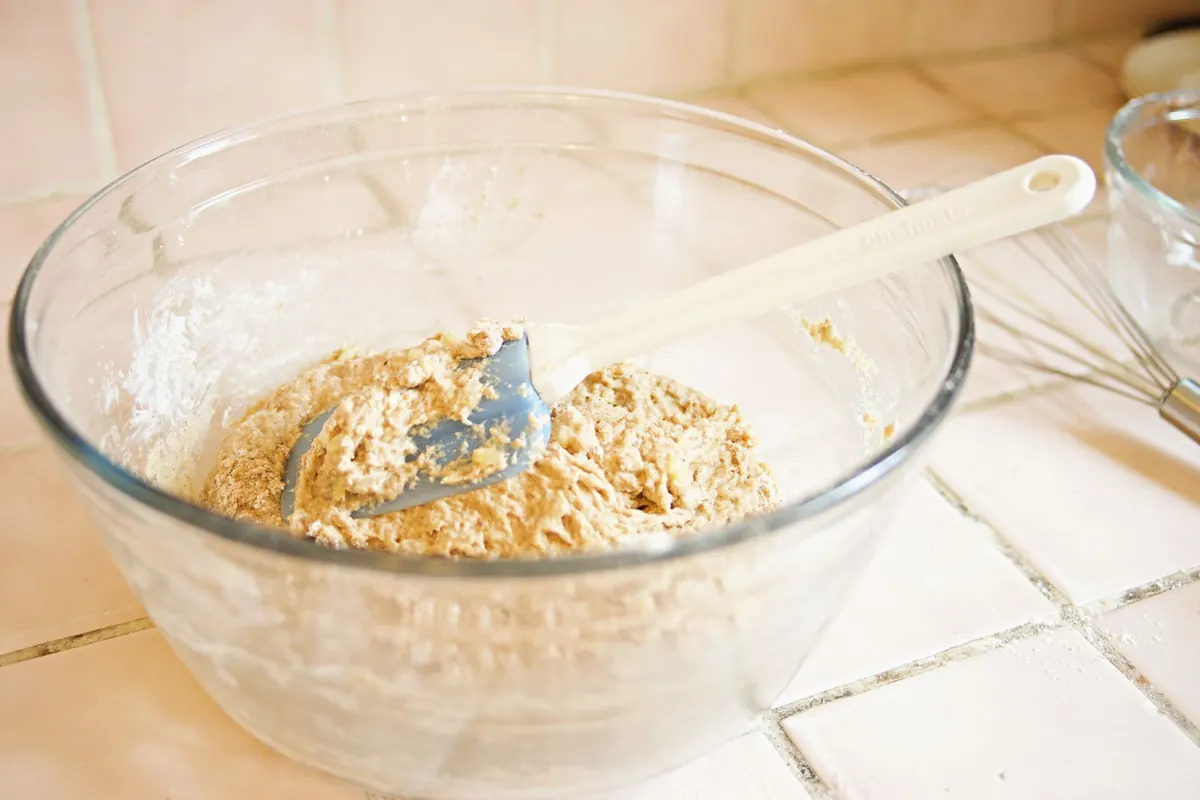
The French baker Raymond Calvel is usually credited with popularising the term, and the idea is simple. You combine flour and water, mix just until no dry patches remain, cover the bowl, and walk away for 20 to 60 minutes. Nothing else goes in. During that time the flour hydrates fully, and the gluten proteins begin linking up on their own, without the interference of salt or acid. Come back and the dough has gone from shaggy and rough to something smoother and noticeably more extensible. It stretches further before it tears.
Fermentolyse: flour, water and starter
Here you add the levain or yeast at the same time as the water, hold back the salt, and let the whole mixture rest for roughly 20 to 45 minutes. The starter brings its own enzymes and, over time, a little acidity. So while the flour is hydrating, fermentation is already ticking along. The name is newer than the technique; it spread through sourdough circles as a way to describe a rest that pulls double duty.
The Gluten Question: Strength Versus Slackness
This is where the choice matters most, and where most home bakers notice the difference in their hands rather than in the crumb.
An autolyse gives you a cleaner, more predictable gluten network. Because no acid is present yet, the dough strengthens rather than softens during the rest. That makes it the safer bet for high-hydration doughs, for whole grain and rye-heavy blends, and for softer or older flours that need all the help they can get. If your dough usually feels like it is fighting you at 80 percent hydration, a 45-minute autolyse will often do more for you than another set of folds.
A fermentolyse leans the other way. The early acidity and enzymatic activity push the dough toward extensibility fast. That can be useful for stiff doughs or for flour that is stubbornly elastic, but it comes with a ceiling. Leave a fermentolyse going for an hour and a half in a warm kitchen, especially with fresh-milled whole grain flour, and you may find the dough weaker than when you started. It stops stretching and starts slumping.
If the dough feels like it is getting softer and stickier during the rest rather than more supple, the rest has run too long for that flour.
Flavor: A Smaller Gap Than You Might Expect
Honesty helps here. With a long bulk fermentation and an overnight cold proof, the flavor difference between the two methods is subtle. Anyone claiming otherwise is probably tasting what they expect to taste.
Where fermentolyse does earn its keep is in shorter schedules. Starting fermentation 30 to 45 minutes earlier gives the yeast and bacteria a head start, which shows up as a touch more acidity and aroma in lean sourdough, particularly in a five- or six-hour bulk. It is a genuine advantage for same-day loaves.
Autolyse tends to produce a rounder, sweeter, more wheat-forward profile. That sounds like marketing talk, but it is noticeable in delicate breads where you do not want acidity crowding the flour: a country white with a high percentage of sifted flour, a milk bread, a baguette where the crust and the wheat should be the whole story. In whole wheat loaves with 30 percent or more extraction flour, the bran's bitterness dominates either way, and the flavor argument largely disappears.
Time, Temperature and the Flour in Front of You
Neither rest happens in a vacuum, and the room matters as much as the recipe.
- Warm kitchens (26°C and up): keep either rest short. Twenty minutes is plenty for a fermentolyse, and 30 for an autolyse. Use cooler water if you want more time.
- Freshly milled or whole grain flour: shorten everything. These flours carry more active enzymes, and a long salt-free rest can turn them soupy. Twenty to 30 minutes, then move on.
- Strong white bread flour at high hydration: the ideal case for a 45- to 60-minute autolyse. You get hydration and strength with very little risk.
- Cold rooms and cold flour: extend the autolyse rather than the fermentolyse. Hydration is slower in the cold, but so is enzyme activity, so a longer plain rest is safe.
Choosing Between Them: A Practical Guide
Reach for an autolyse when:
- You are working at 75 percent hydration or above.
- The formula includes whole wheat, spelt, rye or freshly milled flour.
- Your flour is on the weaker side and you want the dough to hold together.
- You want a clean, wheaty flavor with restrained acidity.
- You are shaping a wet dough and need every bit of dough strength you can get.
Reach for a fermentolyse when:
- You are baking on a tight schedule and want fermentation underway immediately.
- Your dough is stiff, or the flour is so elastic it refuses to relax.
- You are making a same-day sourdough and want more complexity in a short bulk.
- You are mixing by hand and would rather skip part of the kneading entirely.
Do not do either one with salt in the bowl, and do not stack a fermentolyse on top of a long bulk in a hot kitchen. That is how doughs end up unmanageable.
Test It Yourself in One Bake
You do not need to trust anyone's opinion, including mine. Split a batch and settle it in your own oven.
- Mix your full formula of flour and water, then divide it in half by weight.
- Add starter to one half straight away and leave it covered for 30 minutes, salt still out.
- Leave the other half as flour and water for the same 30 minutes.
- After the rest, add starter and salt to the second half. Bring both doughs to the same salt and starter percentages and finish them side by side.
- Give both the same folds, the same bulk temperature and the same proof. Bake them together.
- Taste both plain on day one, then again on day two. Crumb softness and flavor drift show up overnight.
Keep notes on how each dough felt at the first fold. That is usually where you learn more than the tasting does.
What to Do Tomorrow Morning
If you bake one loaf a week with a standard white sourdough at 70 to 75 percent hydration, use a 40-minute autolyse and stop thinking about it. It is forgiving, it improves the dough, and it fits around making coffee. If you are squeezing a bake into a single afternoon, put the starter in with the water, rest 25 minutes, add salt, and get on with your folds. Save the longer ferments for flours that can take them, and always let your hands rather than the clock tell you when the rest is finished.
Photo: Rachel Loughman / Pexels